

Planning a Slow Travel Day: A Beginner's Guide to Fewer Stops and Better Stories
A day with seven pins on the map feels ambitious. A day with two feels like a waste of a trip. Then you come home, and the seven-pin day has collapsed into a smear of buses, queue ropes and the back of your own phone, while the two-pin day still has a smell attached to it — wet stone, coffee, someone's laundry drying over a balcony — and a story you keep telling at dinner. Fewer stops isn't a sacrifice. It's a trade: you give up coverage and get back material.
Slow travel isn't a personality type, and it isn't a moral position. It's a set of decisions you can make the night before, with a map, a notebook and a bit of nerve. Here's how to design one such day from scratch.
The Hidden Cost of an Extra Stop
Every stop on an itinerary carries an overhead you don't see when you're sketching it out. There's the transit: finding the stop, waiting, riding, walking the last four hundred metres. There's the orientation: working out where the entrance is, whether the ticket covers the upstairs, where the toilets are. And there's the quiet tax on your attention, which is the expensive one. Every new place resets your noticing, and you spend the first twenty minutes comparing what's in front of you to what you expected, instead of simply looking at it.
Then there's the tab-keeping. With three or four places still ahead of you, half your mind stays on the clock. You check the time at the exact moment something interesting is happening in front of you, and the interesting thing loses.
A useful exercise: think back to your last trip and count the places where you sat down for more than fifteen minutes without a screen in your hand. That number says more about how much you actually saw than the pin count does.
Choose One Anchor and One Drift
Beginners over-plan because planning feels like progress. Try replacing the list with two items instead.
The anchor is the single thing worth crossing town for: a market hall, a small museum with one room you care about, a hill with a view, a church with a floor you've read about. One per day. Two at most, and only if they sit close together.
The drift is the loose area around the anchor, worked on foot, in no particular order. Draw a circle on the map roughly a twenty-minute walk across and let that be the boundary. Inside it, you follow whatever looks interesting — a street with good light, a shop with crates outside, a staircase going up.
For example: the anchor is a covered market. You'll spend forty minutes inside it and two hours in the surrounding streets, and the two hours will be the part you remember. The market gave the day its shape; the streets gave it its content.
Schedule the Empty Hours on Purpose
The blank block in the middle of the day is always the first thing to get eaten. It disappears because it looks like wasted time on paper and feels like wasted time at eleven in the morning, when you're standing on a corner with a map and an unhelpful burst of energy.
So protect it deliberately. Put a two-hour block in your notes with the word "nothing" written in it, and give it a location rather than a task: a square with trees, a bench facing a ferry terminal, a café with a window and no music. Then add one rule — no phone for the first twenty minutes. Boredom isn't failure. Around the ten-minute mark, your hearing sharpens and the place starts handing you things.
What belongs in the gap
- One long sit, in the same spot, for at least half an hour.
- One slow loop with no destination, ending roughly where it started.
- One small purchase — bread, a postcard, a coffee — that involves speaking to someone.
- One thing you'd normally photograph and walk past. Sketch it badly instead, or write down three details about it.
How to Decide What to Cut
Cutting is the actual skill, and it gets easier with a few filters. Run your shortlist through these:
- Cut anything you'd only visit to justify the journey. If it's on the list because it's near the station, it's not on the list.
- Cut the second museum of the same kind. Two art galleries in one day means you'll remember neither, and the second one gets a distracted twenty minutes.
- Cut anything that needs a cross-city trip for under an hour on site. The ratio is bad and the day pays for it.
- Cut the "while we're here" additions. These are the stops that quietly turn a slow day back into a fast one.
- Keep the thing you'd be quietly embarrassed to skip. That's usually the anchor, and it deserves the best hours of the day rather than the leftovers.
A decent test: if a place would only ever appear in your photos and never in a single sentence you'd say out loud, it's a candidate for cutting.
A Template for a Slow Day
This is a shape, not a timetable. Move the pieces until they fit the place and your own energy.
- Morning, no alarm. Wake when you wake. Eat breakfast at the same bar or bakery twice during your stay, so that by the second morning someone nods at you.
- One anchor, mid-morning. Go early, before the groups. Give it real time — an hour, not the twelve minutes it takes to walk the rooms and take three photos.
- A lunch that runs long. Sit down. Order the thing you can't identify. Stay for coffee you didn't plan to order.
- The drift, early afternoon. Wander the circle around your anchor with no route. Turn down the narrow street. Follow the noise.
- The bench hour. Stop moving entirely. This is the block that produces the notes.
- One small evening thing. A walk along the water, a plate of something standing up, a view from a bridge. Not a second anchor.
That's two fixed points and five or six hours of space between them. It will feel, at around eleven in the morning, as though you're missing something. That feeling passes in about twenty minutes and is replaced by the thing you came for.
What to Write Down, and What to Ignore
Slow days produce material, but only if you catch it. Detail fades within hours; by the evening you'll remember that the market was "nice" and lose the woman selling bitter greens out of a plastic crate.
Skip the question "how do I feel about this place?" — it tends to produce nothing. Collect facts instead, three of them at every sit-down:
- The last thing you heard before you sat down.
- What the person at the next table ordered.
- One sign in the local language you had to guess at, and what you guessed.
- The smell of the street at that hour.
- One thing you expected, and one thing that broke the expectation.
Facts are what turn into sentences later, on the train or at home when someone asks how the trip was and you'd rather not say "good".
A slow day isn't a day without a plan. It's a day with a plan that survives being interrupted.
Before You Go: A Short Checklist
- Two fixed points, maximum, written down with their opening hours.
- Check closing days — plenty of museums and small churches shut one day a week, and it's rarely the day you assume.
- Cash for the small places that don't take cards.
- One sit-down location chosen in advance for each half of the day.
- A notebook or a notes app you'll genuinely open, and three lines minimum at each stop.
- If you're walking far from town or on your own, tell someone your rough route and carry water.
- Explicit permission to abandon the plan at any point without calling it a failure.
Start with one slow day on your next trip, not seven. Pick the anchor, draw the circle, protect the empty block, and let the rest of the day be slightly under your control. The stories you bring home don't come from the number of places you reached. They come from the half hour you stayed put when you could have moved on.
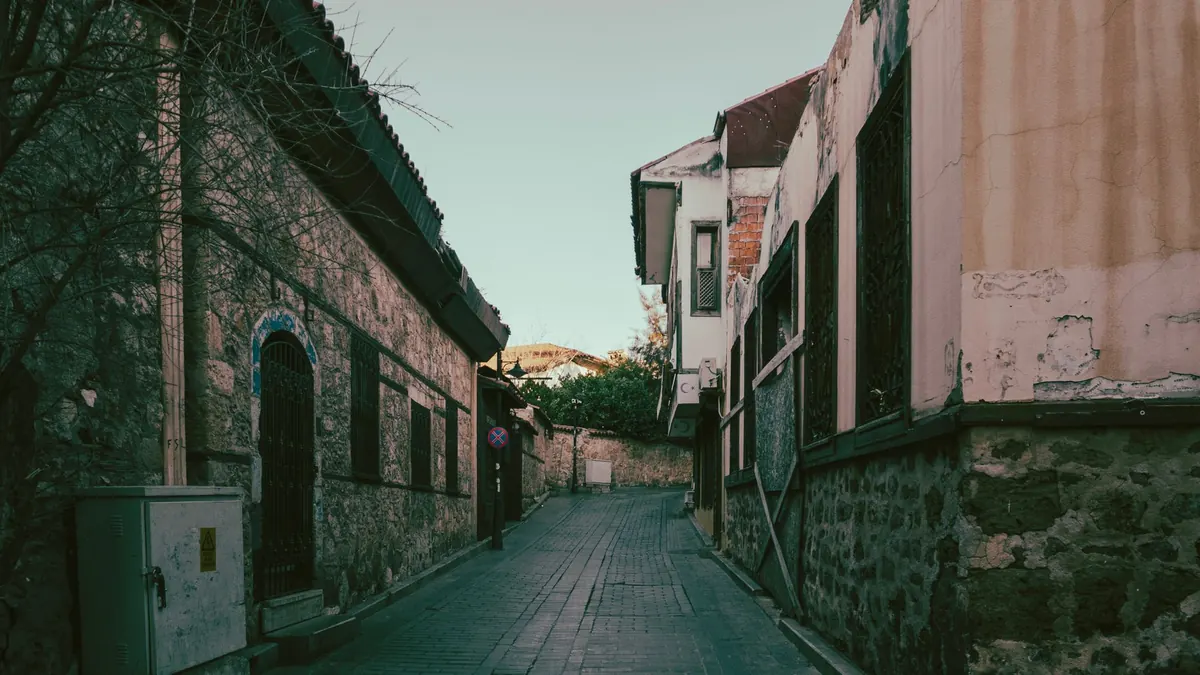
Photo: Willgard / Pixabay