
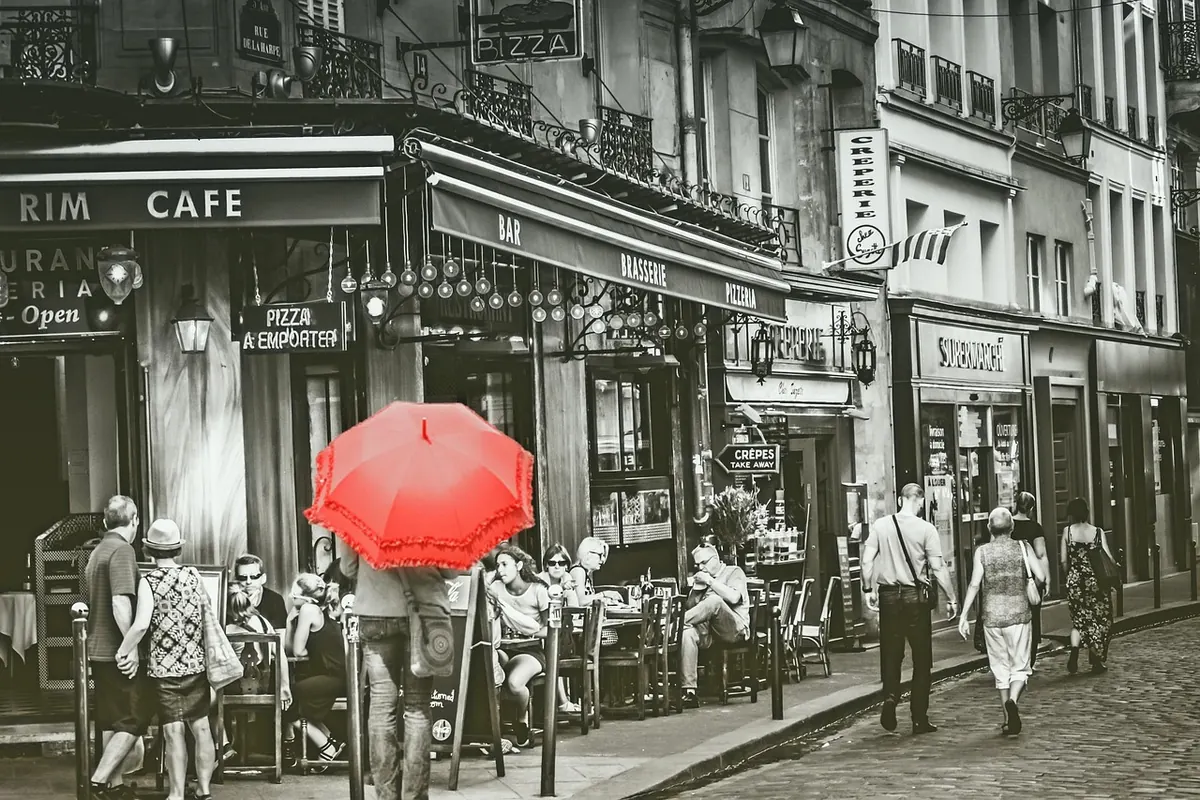


The 7-Point Culture Checklist for Travelers Who Want to Tell Better Stories
Most travel writing fails in the same quiet way. The light is lovely, the pasta is perfect, the sunset earns its adjective, and by the last line you have learned nothing a brochure couldn't have told you. The culture has become a backdrop, and the traveler has become a person describing wallpaper.
Better stories don't come from more research. They come from better attention, aimed at ordinary things: who opens the shutters, which chair is left empty, what a potter does with his hands when he thinks nobody is watching.
Here is a checklist worth keeping in your pocket — seven habits of noticing that turn a place from scenery into a story.
Start With the Street, Not the Sights
Put the list down for an hour. Find a step, a bench, a café chair with a view of something unremarkable — a corner with a kiosk, a doorway where deliveries arrive — and stay long enough to become furniture.
Then ask three questions, not about monuments but about errands. Who walks this street at seven in the morning, and who owns it at two in the afternoon? What are people carrying? Where do they stop, and is stopping normal here or suspicious?
The answers are specific, and specificity is what makes a reader trust you. A woman hauling two bags of bread before dawn tells you where the day begins. A cluster of men on plastic chairs tells you which corner is the neighborhood's living room. None of this needs a ticket, and almost none of it appears in guidebooks, because it changes and it belongs to nobody's official schedule.
Keep your phone in your pocket for the first twenty minutes. Photograph later, once you know what's worth remembering.
Learn the Shape of the Day
Every place has a rhythm of open and closed, loud and quiet, crowded and empty. Travelers who ignore it end up eating alone in a restaurant that fills at nine, then wonder why the town feels dead. The town isn't dead. The timing is off.
Note the hours of ordinary life, not the tourist ones: when the bakery sells out, when the market's last stall is loaded back into a van, when the shutters come down and the street belongs to cats and delivery bikes. Ask the person at the counter, "When do you eat?" It's a better question than "Where should I eat?" and usually gets a longer answer.
Then adjust. Eat when people eat. Walk when people walk. The reward isn't authenticity, whatever that word is supposed to mean — it's the company of ordinary life, and better material for the page. A square at half past six in the evening, when the light is low and chairs are dragged outside, will teach you more about a town than the same square at noon.
Follow the Object Back to the Hands
Souvenir shops are the surface of a culture's craft; the workshop is the layer beneath. When something catches your eye — a ceramic bowl, a woven basket, a copper pot, a wooden spoon worn smooth — ask the vendor who made it. Sometimes the answer is "a factory in another country," and that's useful information too.
If there's a workroom you can visit, visit it politely, and buy something small if you stay a while. Watching someone work is a gift, and gifts are rarely free. Ask before photographing hands or tools. Ask who taught them. Ask which part of the work they like least. Craftspeople tend to be generous with answers when they sense you're not treating them as a photo opportunity.
Then describe the work, not just the product. The smell of glue or sawdust, the whir of a wheel, the jar of rejects by the door, the way a maker squints at a rim before turning it. A paragraph like that outlives any picture of a finished bowl on a shelf.
Read the Small Rules, Then the Silence
The rules
Every place has a floor of courtesy nobody explains: whether to take your shoes off, how loudly to greet, when to queue, how to hand over money, whether to bargain, what to wear indoors or in a church. Getting these wrong isn't a catastrophe. Ignoring them is a small insult.
Learn by watching, then by asking. One question to a host — "Is there anything I should know about visiting a home here?" — saves you a hundred quiet errors. When in doubt, err toward quiet and toward covering up. You can always relax later; you can't un-insult an aunt.
The silence
Also notice what isn't there. A restaurant with no music. A street with no signage. A shop where nothing has a price and everything is negotiated. An older person who never offers a first name.
Absences carry information. No music might mean conversation is the point. No prices might mean the price depends on who you are, which is worth understanding before you feel cheated. A missing first name might mean formality is a form of respect rather than distance. Write down what you don't see, then ask about one of those things later, gently.
Write It Down While It's Still Warm
Memory is a bad typist. Five minutes a day with a notebook will do more for your writing than a hundred photographs.
Write nouns first: the name of the street, the three things on the table, the two words the vendor repeated, the exact time. Adjectives can come later, and they should be earned. Note what you overheard without pretending to understand more than you do. Note the sounds — a bell, a scooter, a rooster in the middle of a city — and how they shifted through the day.
Learn four phrases: hello, thank you, excuse me, goodbye. Say them badly. Names matter too, for dishes, streets, and people who let you use theirs. If you're recording audio or video in a way that includes people, ask first. That isn't a legal disclaimer; it's basic decency, and it makes better material anyway.
The Seven-Point Checklist
Keep this short. It's a checklist, not a doctrine.
- Sit still for twenty minutes. Before you photograph a street, watch who uses it, when, and for what.
- Learn the day's shape. Opening hours, meal times, the hour when the shutters come down.
- Follow the object to the hands. Ask who made it, visit the workroom, pay for the time you take.
- Learn the small rules. Greetings, shoes, dress, money, the geometry of a queue.
- Listen for the recurring words. Four phrases, a few names, the sounds that make up a place's daily soundtrack.
- Notice the absence. Ask what a silence, a missing price tag, or an unlisted name is telling you.
- Write it down the same day. Nouns, times, names, one line of dialogue you actually heard.
The Backdrop Test
Before a story leaves your notebook, read it with one question in mind: could this paragraph be about any coastal town, any mountain village, any city with a market and a church? If yes, it's a backdrop. Add the specifics that belong only here — the bakery's second opening hours, the name of the street where the chairs come out, the object that led you to a workroom.
Two more questions are worth asking. Is anyone in this scene actually doing something, or are people just standing there looking picturesque? And did you get permission to tell their part of it? Not everything you observe belongs in print. If someone told you something in confidence, or a family moment unfolded in front of you, let it stay with you.
Finally, check your facts before you publish: names spelled correctly, places described accurately, hours verified rather than half-remembered. The goal isn't to make a place sound authentic. It's to be honest enough that someone who lives there would recognize it — and might even say you got it right.
Photo: Lens_and_Light / Pixabay