

How to Write a Travel Story That Feels Like a Place: A Scene-First Guide
Somewhere in your bag there is a notebook with a page that reads: Arrived Bologna, hot, found the apartment, ate well, market excellent. You remember the market. The notebook does not. That gap — between what happened and what got written down — is where most travel stories go quiet.
Scene-first writing closes it. Instead of reporting a place, you rebuild a few minutes of it so precisely that a reader who has never been there can stand inside them. The method is less mysterious than it sounds, and it begins long before you open a laptop.
Start With a Scene, Not a Summary
A summary tells the reader what a place was like. A scene lets them watch it happen. "The fish market was lively and full of character" is a summary; you could write it without going. "At six, the fishmonger hosed the tiles down and the water ran toward the drain in a black line, past the crate where a boy was stacking lemons" is a scene: someone is doing something, somewhere, at a particular hour.
Before you draft a paragraph, run one test. Can you point to a person, a place, and a moment? If yes, keep going. If not, you are still summarising — which is fine, summaries are scaffolding. But the scene is what a reader carries home.
This is why the opening line of a travel piece so often fails. "Our first day in Porto was unforgettable" gives the reader nothing to see. "The woman at the counter asked if we wanted the small custard tart or the large one, and then answered for us" starts a film.
Collect Material Like a Scene Writer
Immersive stories are rarely the product of beautiful sentences. They are the product of good notes taken at the right altitude. In the moment, do not write "atmosphere" or "charming." Write what a camera would catch and a microphone would pick up.
A workable habit is three lines per moment: what I saw, what I heard, what my body noticed. That third line is the one most people skip, and it is often the most useful — the sweat under a bag strap, the ache from standing on cobbles, the chill of a church floor through thin soles.
Also record the things that rarely make it into notes:
- What time it was, and how you knew.
- What you were carrying, and what it made difficult.
- One overheard exchange, paraphrased — not invented.
- Something you did not understand, and how you handled it.
- The one detail that arrived late, after you had already decided the place was a certain way.
Keep the notebook honest. If you did not notice the smell of the bakery on the day, do not add it later because bakeries smell of bread. Readers forgive gaps. They do not forgive decoration.
Build the Scene From the Ground Up
Anchor the reader in space
One or two sentences of orientation, no more. Where are we standing, who else is here, what is the light doing. Resist the urge to explain the town's history in paragraph two; the reader needs a floor before they need a lecture.
Give someone something to do
Places come alive through hands. The bus driver counting coins into a plastic tray. The man folding a newspaper into quarters so it fits his coat pocket. A person in the middle of a small task is more convincing than a paragraph of description, because the reader can predict what happens next and wants to know if they are right.
Introduce a small change
Scenes turn on a shift, not on drama. The rain starts. The shopkeeper pulls the shutter down. The ferry horn goes and everyone stands at once. You get lost, or someone speaks to you, or your card is refused. It does not need to be significant. It needs to move.
Choose Details That Do Work
Detail is a filter, not a catalogue. A good detail reveals character, place, or stakes. A decorative detail only proves you were there. If a sentence could be moved to another city without anyone noticing, it is probably decoration.
The strongest details usually complicate the first impression rather than confirming it:
The hardware shop on the seafront sold snow shovels, four of them, stacked by the door in August.
One detail like that does more than five pleasant ones. It creates a question the reader wants answered, and questions are what pull people through a story.
It helps to give yourself a quota. In a paragraph of first draft, mark every adjective and cut three. Then look for what you replaced them with. Usually you will find the verb was doing the work all along: the door sighed is better than the old wooden door was charming.
Turn Your Notes Into a Scene
Once you are back at a desk, the work is mostly arrangement. Try this order:
- Choose three moments from your notes that you can actually see. Not the biggest sights — the clearest minutes.
- Write each one as a single paragraph, in past or present tense, whichever comes out first. Do not mix tenses later.
- Put the reflection after the action, never before it. Let the reader watch, then tell them what you made of it.
- Write the connective tissue last. Most transit between scenes compresses to one sentence: We took the slow train north the next morning.
- Read the draft aloud and mark every place you explain something the scene already showed. Delete those lines. They are the most common reason a good story feels flat.
- Check the balance. Scene should dominate; summary should appear in short bursts, like a hand on your back steering the reader between rooms.
Revise Until the Place Holds
Then run a pass with a checklist. It takes twenty minutes and changes the piece:
- Does the reader know what time of day it is within the first hundred words?
- Is there a sound, a smell, or a temperature in the opening scene?
- Can you name three objects in the frame?
- Does anyone speak, even briefly?
- Where is your body in the scene — tired, wet, hungry, carrying too much?
- Does the last line land on an image rather than a moral?
If a scene still feels thin, it is usually missing a person rather than an adjective. Add someone doing something ordinary and the place will firm up around them.
Before You File the Story
Write the scene within a couple of days of the trip, while the sound of the street is still in your ears. Keep a short list of words you overuse — bustling, hidden gem, vibrant, quaint — and search for them before you publish; each one is a place where you stopped looking.
Keep the notebook, too. The lines that seemed useless at the time, the price of a coffee, the wrong turn, the name you could not pronounce, are the raw material you will want two years from now. A place becomes a story in the second draft, but only if the first draft was honest about what you actually saw.
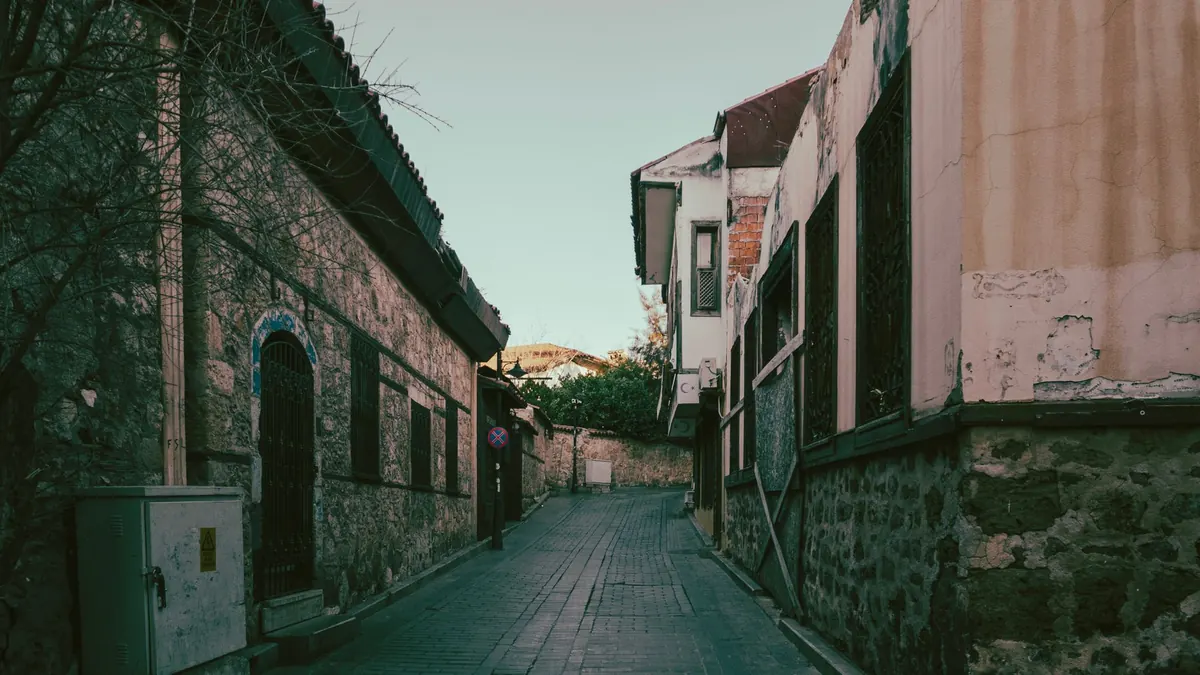
Photo: Engin_Akyurt / Pixabay