Travel Photography Checklist for Storytellers: 15 Shots Before You Leave a Village
The bus leaves at four. At half past three you are standing in the square with forty frames of the church, the fountain and a cat asleep on a wall, and almost nothing that explains what it felt like to spend two days here. It happens to everyone. Landmarks are easy to find; the small evidence of a place in use is what disappears first when you are tired, packed and thinking about the road.
This checklist exists for that last hour. It is a set of prompts, not rules. Walk through a village with these fifteen frames in mind — or scrawled in the back of a notebook — and you will come away with something closer to a story than a set of postcards.
Why a checklist beats a shot list
A shot list names things: the church, the bridge, the old olive press. A checklist names relationships: the bridge as someone crosses it, the press as a man wipes his hands on his apron beside it. One records a location. The other records how the location is lived in.
The most useful thing you can do before you leave anywhere is ask what a stranger would need in order to feel the shape of the day. That usually means an establishing frame, a person, a detail, a moment of contact and a departure. Five beats, fifteen pictures, and enough slack to let the place surprise you.
Keep the list light. If you spend the morning hunting items one by one, you will photograph your checklist instead of the village. Treat each prompt as a question you already know how to answer with your eyes.
The fifteen frames
Arrivals and edges (1–3)
Start where the village starts, before you are inside it.
- 1. The approach frame. Walk to the point where tarmac becomes track, or where the last field meets the first wall. Include a person heading in, small in the frame. Give the road room to lead somewhere and do not crop feet or sky out of nervousness.
- 2. The threshold. Find a doorway where the inside light is brighter or darker than the street and wait for someone to cross it. That single step, in or out, tells a reader more about domestic life than any facade.
- 3. The worn surface. Steps hollowed in the middle, a handrail polished dark, a curb smoothed by carts. Get low, and put a foot, a wheel or a basket in the frame so the wear has scale.
Work and hands (4–6)
Labour is where a place shows its grammar. Ask before you photograph it, then get close enough to see texture.
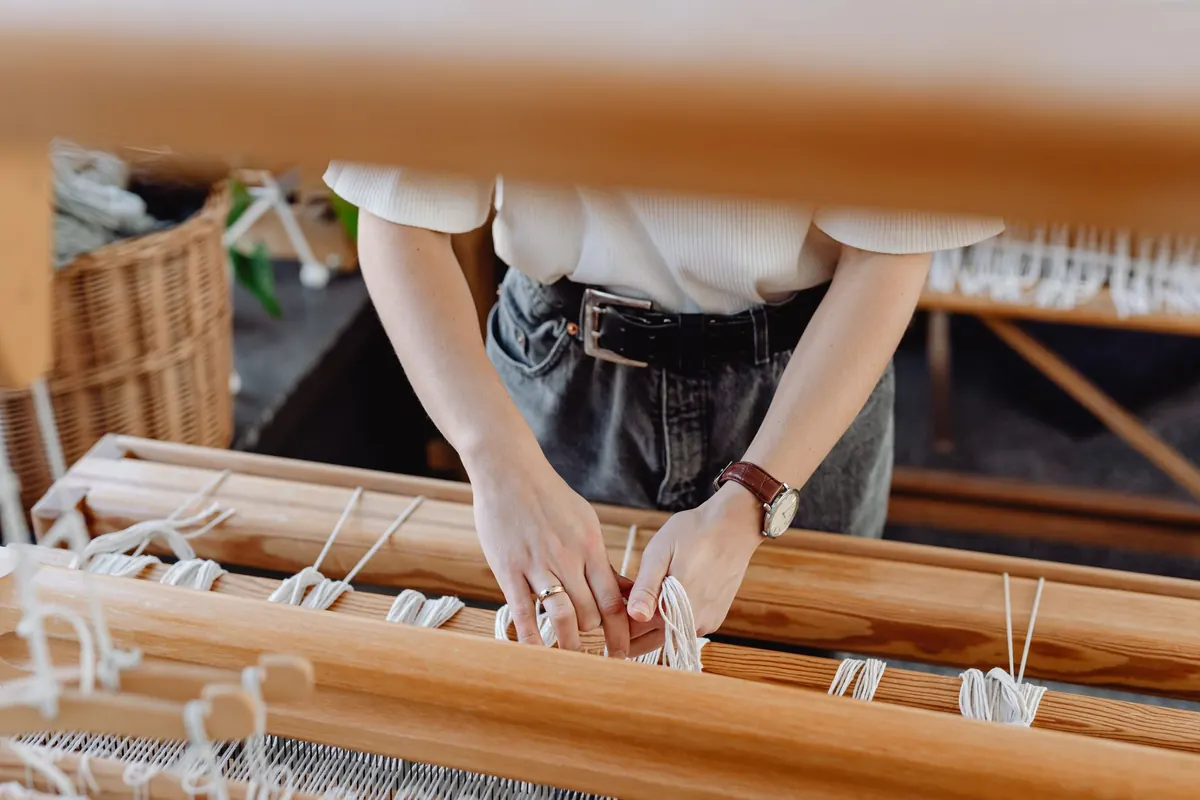
- 4. Hands mid-task. Kneading, gutting fish, shelling peas, threading wire, sorting fruit into crates. Focus on the hands and let the face soften out of focus if the person is shy. Shoot several frames — hands move faster than you expect.
- 5. Tools at rest. The knife on the board, the broom against the wall, boots by the door, spectacles folded on a ledger. Photograph them where they sit, not rearranged. These are the frames you will pair with a portrait later.
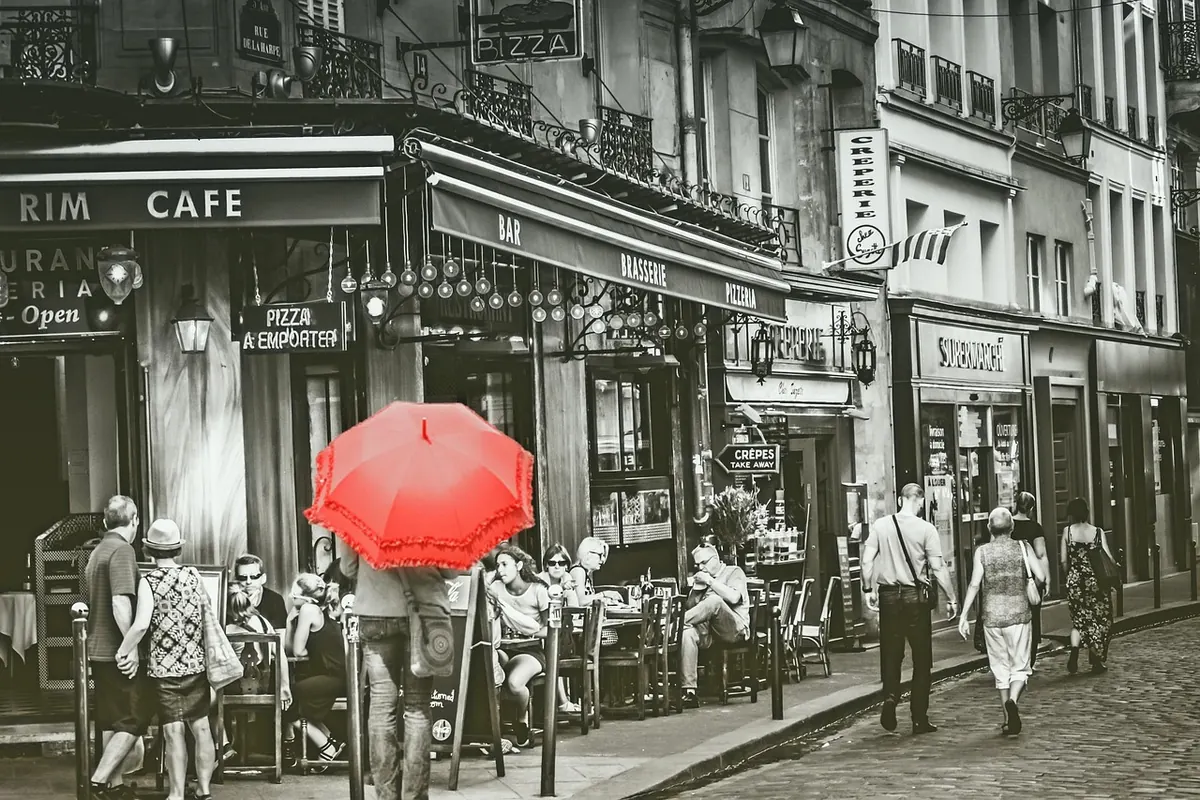
- 6. The stall before the rush. Empty tables, crates still stacked, the first customer arriving. The half-built version of a public place is often more eloquent than the crowded one.
Faces and gestures (7–9)
- 7. The contextual portrait. Ask first, then step back further than feels natural — long enough to include their usual spot, their tools, the wall behind them. A portrait with context survives editing; a tight headshot of a stranger rarely does.
- 8. The glance across the square. Frame two people, one looking at the other. It creates a line inside the picture and hints at a relationship you do not need to explain.
- 9. The greeting. The handshake, the embrace, the hand on a shoulder, the two men who stop and hold each other's arm while talking. Aim for the contact, not the aftermath, and shoot a burst because greetings last a second and a half.
Walls, weather and small evidence (10–12)
- 10. The window with a life behind it. Lace, plastic plants, dishes drying, a face half visible. Stand square to the frame, keep the verticals straight, and wait for the light to settle.
- 11. Walls that talk. Notices for a funeral, a football sticker, a poster for a saint's day three years past, paint peeling in three colours. Fill the frame and check the corners — this is where the incidental detail hides.
- 12. The small civic or sacred thing. The shrine at the corner, the bench with a brass plaque, the fountain where everyone fills bottles. Photograph it alone, then again with someone using it.
Transitions (13–15)
- 13. The loading. Bags into a boot, crates onto a roof rack, a crate of chickens tied with string. Departures are logistical and unglamorous, which is exactly why they work.
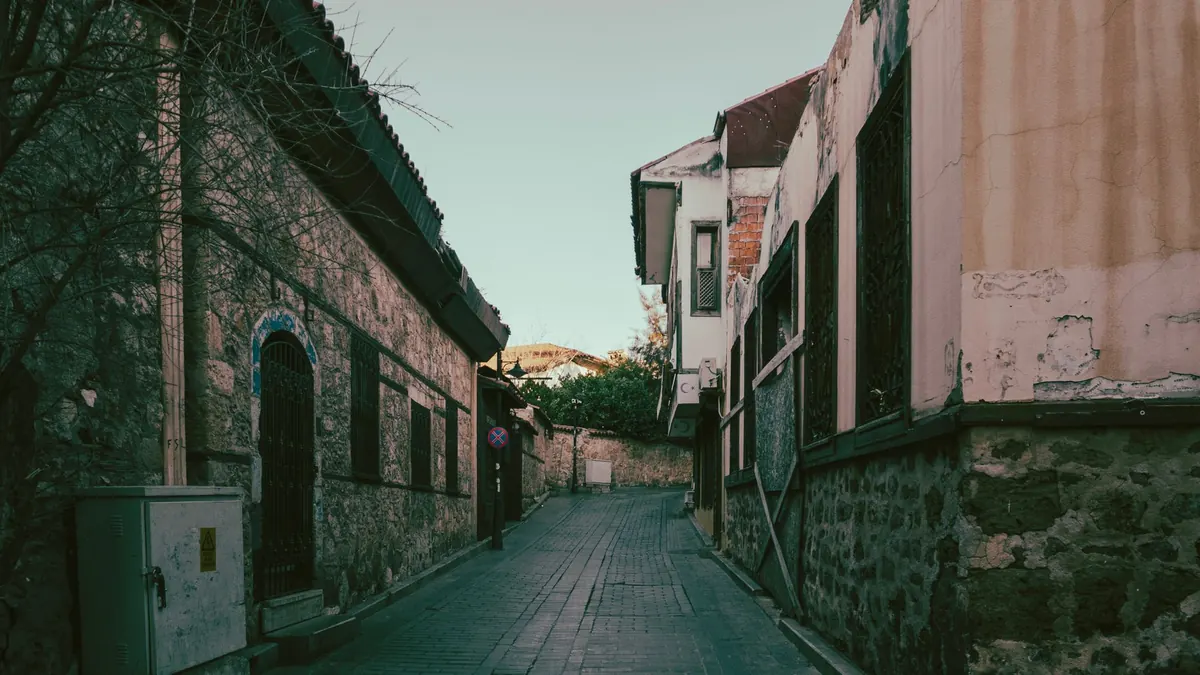
- 14. The road out. Walk to the edge and turn around. Shoot the village from outside it, with a figure, a fence or a power line in the foreground to give depth. This frame ends the sequence.
- 15. The one who stays. Someone watching the bus pull away, or already walking back to work, not looking at you. Take it last if you can. It is the quietest goodbye a photograph can make.
Light, distance and the awkward middle
Three distances, every scene. Shoot wide to place the subject, medium to give context, close for texture. Most photographers default to the middle and wonder why the edit feels flat — the middle distance is safe and slightly dull. Force yourself to step back two metres and then forward until the frame almost embarrasses you.
Work with the light you have rather than waiting for the perfect hour. Villages are busy at midday and quiet at dusk; a square in flat grey light with laundry moving in the wind can carry more information than a golden-hour silhouette. Check your backgrounds before you press the shutter — a stray bin or a parked van will date the picture faster than any face.
If you shoot film, budget your frames and shoot the wide version first so people relax before you move in. On a phone, turn off the automatic portrait blur; the surroundings are the point.
Asking, and knowing when to put the camera down
Learn one sentence in the local language: may I take your photograph. Learn the word for thank you properly. Show the picture afterwards when someone is curious — it builds the kind of goodwill that gets you frame nine instead of a turned shoulder.
Be careful with children. A parent's nod is the minimum, and a schoolyard is not a photo opportunity. In markets, buy something before you start photographing, or at least ask the vendor whose stall is in your frame. If someone shakes their head, thank them and stop; there will be another picture. Some moments belong to the people in them, and a camera lowered at the right time is part of the craft, not a failure of it.
The last hour: a sequence to follow
With thirty or forty minutes before you leave, this is a workable order of events.
- Read the list once, then put it away. Pick the three prompts you know you have not covered.
- Walk one loop of the village and shoot only those three. Nothing else. You will finish faster than you think.
- Sit down somewhere public for ten minutes with the camera off. Watch what repeats: the same dog, the same two women, the same route to the fountain. Repetition is a place's rhythm.
- Take the road-out frame from the edge of the village. Hold the camera steady, breathe out, shoot three frames at slightly different heights.
- In the evening, before the day blurs, back up the card and write one sentence for every frame that still feels alive. Those sentences are the skeleton of the story.
You will not need all fifteen pictures. Six good ones, in the right order, with a detail that nobody else would have noticed, will carry more of the place than a hundred views of the church. The village will keep going after your bus pulls out. What you take with you is the evidence that you were paying attention.
Photo: DariuszSankowski / Pixabay